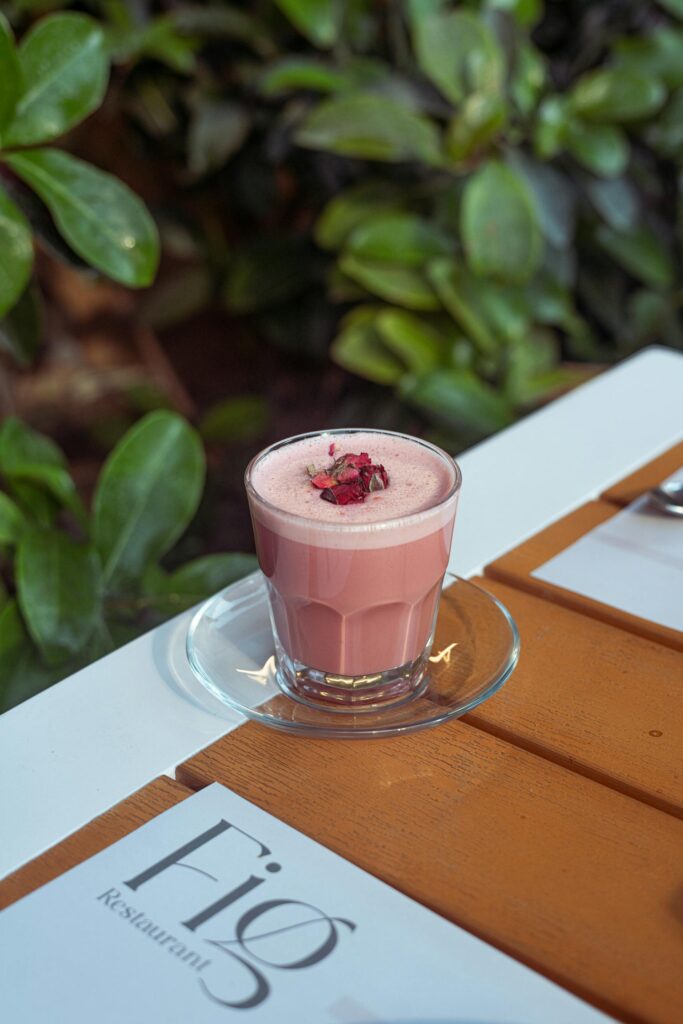
A rose latte is coffee’s softer side. Floral, lightly sweet, and calming.
It’s trending because it feels special without being fussy. One sip, and suddenly your morning slows down. Think cozy mornings, quiet afternoons, or a treat just because.
If coffee had a love language, this would be it!
What Is a Rose Latte?
A rose latte is a classic coffee latte with a gentle floral twist, made by adding rose syrup or rose water to espresso and steamed milk, creating a drink that smells as good as it tastes.
The flavor is soft, lightly sweet, and soothing, never loud or overpowering when done right.
Unlike a vanilla latte, which leans creamy and dessert-like, or a lavender latte, which has a sharper herbal edge, a rose latte sits right in the middle—romantic, balanced, and calm.
It’s the kind of flavor that whispers instead of shouts. You’ll often find it in boutique cafés, Middle Eastern–inspired coffee shops, and modern cafés that love floral flavors and seasonal menus.
Think pink accents, dried rose petals, and menus that read like poetry. This drink isn’t about sugar overload. It’s about slowing down, taking a sip, and letting coffee feel a little more special.
Ingredients You’ll Need
- Espresso or strongly brewed coffee
This is the backbone of the drink. Espresso gives a bold, café-style flavor, while strong brewed coffee works just fine if that’s what you have on hand. - Milk (dairy and non-dairy options)
Milk adds creaminess and balance. Whole milk is rich and smooth, while oat, almond, or soy milk keeps things light and plant-based. - Rose syrup or rose water
This is where the magic happens. Rose syrup adds sweetness and floral notes, while rose water offers a more delicate, subtle aroma—use it sparingly. - Sweetener options (sugar, honey, maple syrup)
Optional, but helpful. A touch of sweetness rounds out the floral flavor and keeps the latte from tasting flat or bitter.
How to Make a Rose Latte (Step-by-Step)
1. Brew the Espresso or Coffee
Start strong. Brew one or two shots of espresso, or make a small cup of strong coffee.
This is your base, so don’t water it down. Think bold but smooth. If the coffee tastes good on its own, you’re already winning.
2. Heat and Froth the Milk
Warm your milk until it’s hot but not boiling. You want steam, not lava.
Froth it if you can—using a frother, whisk, or even a jar with a lid. The foam adds that cozy café feel. It’s the fluffy blanket on top.
3. Add Rose Syrup or Rose Water
Now comes the star of the show. Stir in rose syrup for sweetness, or rose water for a softer floral note.
Go slow. Rose flavor is like perfume. A little goes a long way, and too much can steal the spotlight.
4. Sweeten to Taste
Take a sip. Then decide. Add sugar, honey, or maple syrup if needed. The goal is balance, not dessert overload. Think gentle sweetness, not a candy shop.
5. Combine and Finish
Pour the warm milk over your coffee and give it a gentle stir. Watch the colors blend. That’s the moment.
Finish with a touch of foam, maybe a few dried rose petals if you’re feeling fancy. Then sip. Slow down. You made something special!
Rose Syrup vs Rose Water
Flavor Differences
Rose syrup is sweet, smooth, and easygoing. It blends right into the latte and brings both floral flavor and sweetness in one step. Rose water is lighter and more aromatic.
It smells amazing, but the taste is sharper and more delicate. Think dessert rose versus fresh rose petals. Both work. They just speak different languages.
Which Is Better for Beginners
If this is your first rose latte, start with rose syrup. It’s more forgiving and harder to mess up. Rose water is lovely, but it has a smaller margin for error.
One extra splash and suddenly your latte tastes like a candle aisle. Beginners do better with training wheels. Rose syrup is exactly that.
How Much to Use to Avoid Overpowering the Drink
Less is more. Always. For rose syrup, start with one teaspoon and build from there. For rose water, begin with just a few drops. Yes, drops. Stir, taste, then decide.
You can add more, but you can’t take it back. The goal is balance, not a floral takeover.
Iced Rose Latte Variation
Adjusting Ratios for Iced Drinks
Ice changes everything. As it melts, it weakens the drink, so start a little stronger. Use a double shot of espresso or extra-strong coffee. Add the rose flavor before the ice so it blends well.
Then fill the glass with ice and finish with milk. This keeps the latte bold instead of bland.
Best Milk Choices for Iced Rose Lattes
Some milks shine cold. Oat milk is creamy and smooth without hiding the rose flavor. Almond milk keeps things light and refreshing.
Whole milk works too, but it’s richer and heavier. Skip anything too thick. You want the floral notes to float, not sink.
Tips to Keep the Flavor Balanced
Go slow with the rose. Cold drinks can make floral flavors feel stronger. Stir well so nothing pools at the bottom. Taste before adding extra sweetener. If it feels sharp, add a splash of milk.
If it feels flat, add a tiny bit more rose. Balance is the name of the game.
Flavor Variations & Add-Ins
Rose Vanilla Latte
This is the crowd-pleaser. Add a splash of vanilla along with the rose, and everything softens. The vanilla smooths the floral notes and makes the latte taste cozy and familiar.
If rose feels new to you, this is a safe and delicious place to start.
Rose Cardamom Latte
This one has character. Cardamom adds warmth and a gentle spice that pairs beautifully with rose. Just a pinch is enough. Too much, and it steals the show.
The result feels elegant and slightly exotic, like a café you stumbled into while traveling and still think about.
Rose White Chocolate Latte
Sweet, creamy, and a little indulgent. White chocolate brings richness without overpowering the rose. It turns the latte into a treat, not just a drink.
Perfect for slow mornings or when you want dessert in a mug but don’t want to commit to cake.
Rose Matcha Latte (Coffee-Free Option)
No coffee? No problem. Matcha and rose make a surprisingly good team. The earthy matcha balances the floral notes, creating a calm, steady flavor.
It’s soothing, colorful, and caffeine-gentle. A quiet alternative for afternoons when espresso feels like too much.
Tips for the Best Rose Latte
How to Avoid a “Soapy” Floral Taste
This is the number one fear, and it’s valid. The fix is simple. Use less rose than you think you need. Start small, taste, then adjust. Rose flavor should whisper, not yell.
If it ever tastes like soap, you’ve gone too far. Balance it with more milk or coffee, and next time, ease up on the pour.
Best Rose Products to Use
Quality matters here. Look for food-grade rose syrup or rose water made from real rose petals, not artificial flavoring. Short ingredient lists are your friend.
Avoid anything that smells like perfume right out of the bottle. If it smells natural and gentle, it will taste the same in your cup.
Milk Frothing Tips for Café-Style Foam
Good foam changes everything. Heat your milk until it’s hot but still comfortable to touch. Too hot kills the foam. Froth with small, quick motions to create tiny bubbles. That’s the secret.
Microfoam should look glossy, not bubbly. When it pours like wet paint, you’ve nailed it.
Is a Rose Latte Healthy?
A rose latte can be as light or as indulgent as you make it.
Calories mostly come from the milk and sweeteners, not the rose itself, so choosing low-fat or plant-based milk can keep things on the lighter side.
Rose water adds almost no calories, while rose syrup adds more, depending on how heavy your hand is.
For sugar-free or low-sugar options, use unsweetened milk, skip added sweeteners, or choose a sugar-free rose syrup.
You can also sweeten naturally with a small amount of honey or maple syrup and stop there. As for caffeine, it’s the same as any latte.
Espresso brings the buzz, while a rose matcha latte offers gentler energy.
Want even less? Use half-caff or strong-brewed coffee.
What to Serve with a Rose Latte
Light Pastries
Keep it simple and airy. Croissants, scones, or a plain muffin work beautifully. The soft, buttery texture pairs well with the floral notes without stealing the spotlight. Let the latte shine.
Shortbread or Butter Cookies
This pairing just makes sense. Shortbread and butter cookies are rich but not loud.
Their mild sweetness balances the rose flavor and adds a gentle crunch. One sip, one bite. It’s a rhythm you’ll want to keep.
Almond or Pistachio Desserts
Nutty flavors and rose are old friends. Almond cake, pistachio biscotti, or even a small slice of baklava bring warmth and depth.
The nuts ground the floral notes and make the whole experience feel intentional. Elegant, but still easygoing.
Final Words
Rose lattes are proof that coffee can be soft and special at the same time. They’re easy to make, fun to sip, and feel a little fancy without the café price tag.
Don’t be afraid to play around. A drop more rose here, a splash of vanilla there. That’s how favorites are born!
FAQs
Can I make a rose latte without espresso?
Yes, absolutely. Strongly brewed coffee works well and still gives you that rich coffee base. You can also use instant espresso powder in hot water if that’s easier. No fancy machine needed.
Can I use homemade rose syrup?
Yes, and it’s a great option. Homemade rose syrup lets you control the sweetness and strength. Just make sure it’s food-grade and lightly flavored. When in doubt, start small and taste as you go.
Does rose flavor pair well with coffee?
Surprisingly, yes. When used gently, rose softens coffee’s bitterness and adds a calming note. The key is balance. Too much rose overwhelms. Just enough makes the coffee feel elegant and smooth.
Can this latte be made vegan?
Definitely. Use plant-based milk like oat, almond, or soy, and choose a rose syrup without honey. The flavor still shines, and the latte stays creamy and comforting.
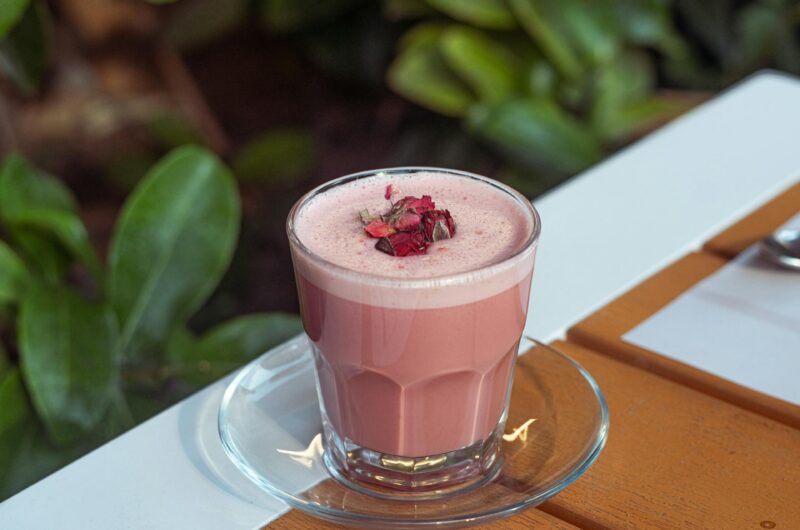
Easy Rose Latte Recipe That Tastes Like a Coffee Shop Treat
Course: Coffee RecipesDifficulty: Easy1
servings5
minutes5
minutes10
minutesA smooth, lightly floral rose latte made with espresso, steamed milk, and a gentle touch of rose—simple, cozy, and café-worthy at home.
Ingredients
1–2 shots of espresso or ½ cup of strong brewed coffee
1 cup milk (dairy or non-dairy)
1 teaspoon rose syrup or 3–5 drops rose water
Sweetener to taste (sugar, honey, or maple syrup)
Ice (optional, for iced version)
Directions
- Brew the espresso or strong coffee and pour it into a mug.
- Heat the milk until hot but not boiling, then froth if desired.
- Stir rose syrup or rose water into the coffee.
- Add sweetener to taste.
- Pour in the warm milk, stir gently, and finish with foam if using. Serve hot or over ice.
Notes
- Start with less rose and add more gradually to avoid overpowering the drink.
- For a vegan version, use plant-based milk and rose syrup without honey.
- For an iced latte, use a stronger coffee base and pour over ice before adding milk.

Hi, I’m Selene Veyra! I’m the coffee-loving creator of Brewed Moments. My passion for coffee began in my grandmother’s kitchen, where her morning brew sparked a lifelong love for the beverage. Now I test brewing methods, gear, and homemade café-style recipes to make great coffee simple for everyone ☕


