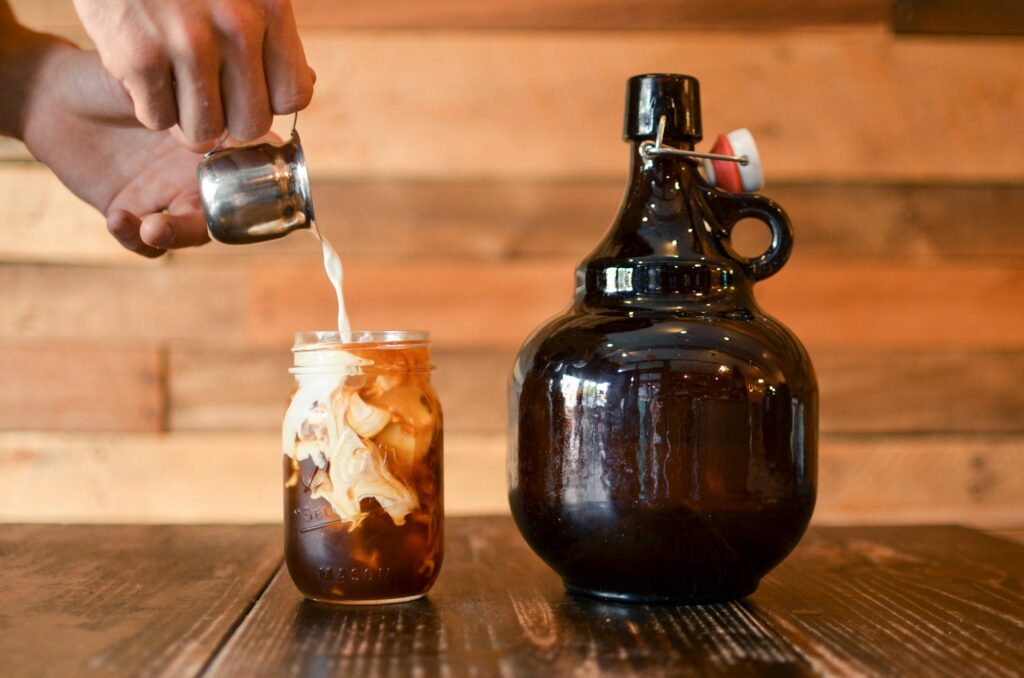
Cold brew isn’t just another coffee trend—it’s the smooth, rich favorite that’s taken over summer mornings and café menus everywhere. Unlike iced coffee, it’s not just hot coffee poured over ice.
Cold brew is steeped slowly in cold water, giving it a naturally sweeter, less acidic flavor and a strong kick that doesn’t punch you in the throat.
The best part? You don’t need a fancy coffee shop or expensive gear to enjoy it.
With the right ratio, a little patience, and a few simple tricks, you can brew cold brew at home that rivals anything served behind the counter.
By the end of this guide, you’ll know exactly how to do it!
What is Cold Brew Coffee?
Cold brew coffee is made by steeping coarsely ground beans in cold or room-temperature water for an extended period—usually 12 to 24 hours—allowing time for the flavors to gently extract without heat rushing the process.
This slow method sets it apart from iced coffee, which is simply hot coffee brewed quickly and then chilled or poured over ice, often leaving behind a sharper, more acidic bite.
Cold brew, on the other hand, delivers a naturally smoother taste, with notes that feel mellow and round instead of sharp or sour.
Because the heat never touches the beans, much of the acidity is left behind, making it easier on the stomach while still packing a bold caffeine punch.
Many people notice a hint of natural sweetness too, which means you may find yourself reaching for less sugar or creamer than usual.
It’s the kind of drink that feels indulgent yet simple, like the difference between simmering a stew all day versus tossing something in the microwave—the time invested changes everything.
The Ideal Cold Brew Ratio
Standard Ratio
The backbone of good cold brew is the ratio of coffee to water.
A common starting point is 1:4 (one part coffee to four parts water). If you want a strong concentrate, you can later dilute it with water, milk, or cream.
If you prefer something that’s ready to sip straight from the fridge, aim for 1:8 instead.
Think of it as deciding whether you want a “coffee syrup” you can stretch out or a smoother, ready-to-go drink.
Both work beautifully, but it just depends on how you like to drink it.
Adjusting for Strength
Ratios aren’t set in stone. If you’re someone who enjoys a cup that practically stands up and walks out of the mug, lean toward more coffee grounds.
If you’re easing into cold brew or prefer something gentle, use a little less. The beauty of cold brew is its flexibility; you can test different ratios until you land on your perfect balance.
A good trick is to brew a small test batch before committing to a full pitcher so you don’t waste precious beans.
Tips on Measuring
Measuring matters more than you think. Coffee scoops can be inconsistent—sometimes fluffy, sometimes packed tight—so weighing your coffee is the most reliable way to get repeatable results.
A kitchen scale might sound fussy, but it removes all the guesswork and makes you feel a little like a mad scientist in the best way possible. If you don’t have one, keep scoops level and consistent.
Just remember: the more accurate your measuring, the easier it is to troubleshoot if your brew comes out too weak or too strong.
Choosing the Right Coffee Beans
Roast Types
When it comes to cold brew, the roast you choose makes a big difference in flavor.
Medium to dark roasts are usually the go-to because their bold, chocolatey, and nutty notes shine through when brewed slowly in cold water.
Light roasts, while bright and fruity, can sometimes taste too sharp or acidic when steeped this way, though adventurous drinkers might enjoy experimenting.
If you’re just starting out, stick with a medium roast because you’ll get a smooth, well-rounded flavor without too much trial and error.
Grind Size
Grind size can make or break your cold brew. A coarse grind is key because it allows water to flow around the grounds evenly, pulling out flavor without dragging bitterness along for the ride.
Think breadcrumbs, not flour. If you grind too fine, you’ll end up with cloudy, sludgy coffee that tastes harsh and leaves grit at the bottom of your glass.
Coarse grounds, on the other hand, produce a clean, mellow drink that’s easier to filter and a lot more enjoyable to sip.
Freshness Factor
Fresh beans are non-negotiable if you want cold brew that tastes alive instead of flat. Coffee begins losing its flavor the moment it’s ground, so if possible, grind your beans right before brewing.
Whole beans stored in an airtight container will keep their character far longer than a bag of pre-ground coffee that’s been sitting on a supermarket shelf.
Freshness brings out natural sweetness and rich aromas, turning a decent cold brew into one that feels like it came straight out of a specialty café.
Step-by-Step Cold Brew Recipe
Step 1: Measure Coffee Beans
Start with the right amount of beans, based on your chosen ratio. For a small batch, around one cup of coarsely ground coffee to four cups of water works well.
Measuring accurately keeps your brew consistent and saves you from wasting good beans.
Step 2: Grind Coarsely
Grind your beans to a coarse texture, similar to sea salt. Too fine, and you’ll end up with sludge and bitterness. Too coarse, and your brew may taste weak.
A burr grinder is best because it gives an even grind, but whatever grinder you have will do the job if you watch the texture.
Step 3: Combine with Cold Filtered Water
Place your grounds in a clean jar, pitcher, or French press, then pour in cold filtered water.
Filtered water really matters here; if your tap water tastes off, so will your cold brew. The cleaner the water, the cleaner the flavor.
Step 4: Stir for Saturation
Give the mixture a good stir to make sure all the coffee grounds are soaked. Dry pockets of coffee won’t extract properly, leaving you with a brew that tastes uneven.
A simple spoon or spatula works fine—no fancy tools required.
Step 5: Steep for 12–24 Hours
Patience is your best friend here. Let the coffee steep for at least 12 hours, and up to 24 if you want a stronger, richer flavor. You can leave it at room temperature or tuck it into the fridge.
Room temp speeds up extraction slightly, while fridge steeping gives a smoother profile.
Step 6: Strain the Brew
Once steeping time is up, strain the mixture. Use a fine-mesh sieve, cheesecloth, or a paper filter if you want extra clarity. If you own a cold brew maker, this step is even easier.
The goal is to remove every bit of ground coffee so your drink stays smooth, not gritty.
Step 7: Store in the Fridge
Transfer your filtered cold brew into a sealed jar or bottle, then pop it in the fridge. It’ll stay fresh for about 7 to 10 days, though most people drink it faster because it’s just that good.
Cold brew keeps its flavor surprisingly well, so you can batch prep for the week and always have a refreshing glass waiting.
Secrets to Success
Use Filtered Water
Water makes up the majority of your cold brew, so it’s no surprise that it plays a starring role in the flavor. If your tap water has a strange aftertaste, that same taste will sneak into your coffee.
Filtered water gives you a clean, crisp base that lets the beans shine without any unwanted extras.
Steep Time Matters
The clock is your hidden ingredient. Twelve hours will give you a lighter, smoother drink, while pushing closer to 24 hours extracts deeper, bolder notes.
But don’t let it sit forever—past that sweet spot, the brew can start tasting bitter or woody. It’s a balance between patience and overdoing it.
Don’t Skimp on Grind Size
Grind size is often where people go wrong. Too fine, and you’ll end up with a muddy, over-extracted mess that feels more like sludge than coffee.
Coarse grounds allow water to move easily, extracting flavor without pulling out too much bitterness. Think breadcrumbs, not sand.
Dilution Tricks
Cold brew concentrate is strong—sometimes too strong for casual sipping. That’s where dilution comes in. A splash of water, milk, or your favorite creamer can mellow it out without losing flavor.
Want to get creative? Add a drizzle of vanilla syrup, a dash of cinnamon, or even a little oat milk for a café-style twist.
Batch Prep
One of cold brew’s best perks is its staying power. Brew a big batch on Sunday, and you’ve got a week’s worth of smooth coffee ready in the fridge.
Store it in a sealed jar or bottle, and it’ll keep its flavor for up to 7–10 days. It’s like meal prepping, but for your caffeine fix—future you will thank you every morning!
Serving Ideas & Variations
Classic: Over Ice with a Splash of Milk
Sometimes the simplest option is the best. Pour your cold brew over a tall glass of ice, add a splash of milk or cream, and you’ve got a café-worthy drink in seconds.
The milk softens the bold edges of the coffee, giving you a smooth and balanced cup that’s perfect for everyday sipping.
Sweetened: Simple Syrup, Vanilla, Caramel
If you’ve got a sweet tooth, cold brew is the perfect canvas. Because it’s chilled, sugar won’t dissolve easily, so simple syrup is your best friend.
A drizzle of vanilla or caramel syrup can turn your drink into something that feels like dessert in disguise. You can also experiment with honey, agave, or even maple syrup for natural sweetness.
Fancy: Cold Brew Lattes, Nitro-Style, or Cocktails
Feeling a little adventurous? Turn your cold brew into a latte by adding frothed milk on top for a creamy upgrade.
Want to impress guests? You can mimic nitro cold brew by shaking it in a cocktail shaker with ice to get that frothy, velvety texture.
And if you’re in a playful mood, cold brew makes a great base for cocktails and mocktails—think espresso martinis with a smoother twist or a refreshing cold brew tonic with sparkling water.
Seasonal Twists: Pumpkin Spice, Cinnamon, Peppermint Mocha
Cold brew isn’t just for summer—it can dress up for any season. Add a sprinkle of cinnamon and nutmeg in the fall for cozy vibes, or stir in pumpkin spice syrup when autumn hits.
Come winter, peppermint mocha cold brew delivers holiday cheer in a glass.
The possibilities are endless, and a few spices or flavored syrups can make your brew feel like a brand-new drink every time.
Health & Cost Benefits
Lower Acidity = Gentler on the Stomach
One of cold brew’s biggest perks is how kind it is on your stomach. Because it’s brewed without heat, the process extracts less acid from the beans.
That means fewer sharp notes and a drink that’s easier for people with sensitive stomachs or acid reflux. You still get the caffeine kick, but without the side effects that sometimes come with hot coffee.
Less Bitterness, More Natural Sweetness
Cold brew naturally highlights the sweeter, smoother flavors in coffee. Without that harsh edge, you might find you don’t need as much sugar or flavored creamer to make it drinkable.
Cutting back on extra sweeteners is a win for your health, and it lets the natural character of the beans shine through. Think of it as letting coffee taste like coffee, only better.
Cost Savings vs. Buying from Coffee Shops
Another benefit? Your wallet will thank you. A single cold brew from a café can easily run $4 to $6, and that adds up fast if it’s part of your daily routine.
Making it at home costs just a fraction, even if you’re buying quality beans.
With a simple jar, some grounds, and a little patience, you can brew a whole week’s worth for the price of one or two store-bought cups.
Final Words
Cold brew isn’t complicated—it’s just the right ratio, a little patience, and quality beans doing their thing.
Even if your first batch isn’t perfect, it’ll still taste better than most coffee shop versions, and you’ll learn as you go.
So grab some beans, start steeping, and have fun experimenting with flavors until you land on your own signature cold brew!
FAQs
How long does cold brew last in the fridge?
Cold brew stays fresh for about 7 to 10 days if stored in a sealed container. The flavor is best in the first few days, so don’t be surprised if it tastes a little flatter toward the end of the week.
Can I use regular ground coffee instead of coarse grind?
You can, but it’s not ideal. Fine grounds over-extract and leave your brew cloudy and bitter. Coarse grind is the way to go if you want smooth, grit-free coffee.
Do I need a special cold brew maker?
Nope. A simple jar, French press, or pitcher gets the job done. A cold brew maker just makes the straining process easier, but it’s far from necessary.
How is Nitro Cold Brew different?
Nitro cold brew is infused with nitrogen gas, which gives it a creamy, frothy texture and a slightly sweeter taste.
It’s usually served on tap, like beer, but you can mimic it at home with a whipped cream dispenser if you’re feeling fancy.
Can I heat up cold brew for a hot drink?
Yes, and it still tastes great. Just heat the concentrate gently with water or milk. You’ll get a smoother, less acidic cup compared to traditional hot-brewed coffee.
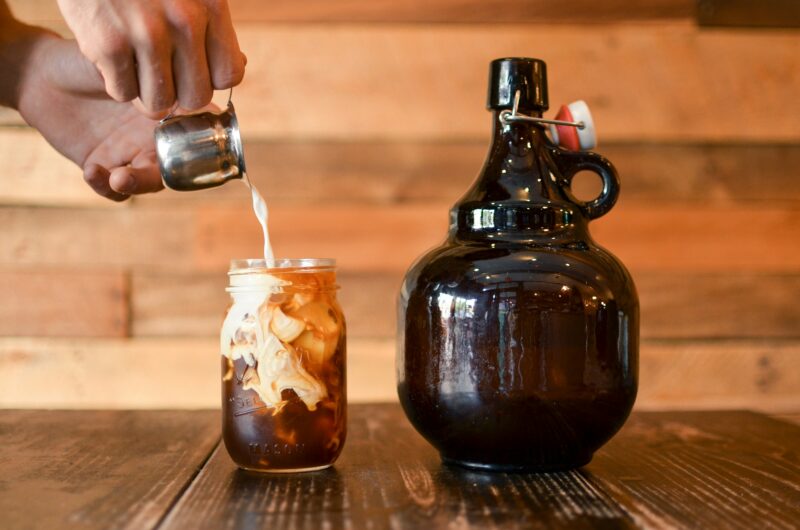
Cold Brew Coffee: Recipe, Ratio, and Secrets to Success
Course: Brewing GuidesDifficulty: Easy4
cups5
minutes12
hoursSmooth, less acidic coffee made by steeping coarse grounds in cold water for a rich flavor.
Ingredients
1 cup coarsely ground coffee beans
4 cups cold filtered water
Directions
- Place coarsely ground coffee in a large jar or pitcher.
- Add cold filtered water and stir until all grounds are wet.
- Cover and let steep for 12–24 hours at room temperature or in the fridge.
- Strain using a fine-mesh sieve, cheesecloth, or paper filter.
- Store in a sealed jar in the fridge for up to 7–10 days.
- Serve over ice, diluted with water, milk, or your favorite flavorings.
Notes
- Use a 1:4 ratio for concentrate or 1:8 for ready-to-drink.
- Fresh, coarsely ground beans give the best flavor.
- Adjust steep time for strength—longer = bolder, but avoid going past 24 hours to prevent bitterness.

Hi, I’m Selene Veyra! I’m the coffee-loving creator of Brewed Moments. My passion for coffee began in my grandmother’s kitchen, where her morning brew sparked a lifelong love for the beverage. Now I test brewing methods, gear, and homemade café-style recipes to make great coffee simple for everyone ☕


